Starting
Whole soaring difficulty pertaining to cutting-edge vehicles requires one of the intensive grasp of diagnostic platforms, specifically with respect to On-Board Diagnostics II (OBD2) and Tire Pressure Monitoring Systems (TPMS). Throughout Europe, Asia, and the US, these features run using separate frequencies. OBD2 specifications are largely coordinated globally, mostly utilizing ISO 9141-50, KWP2000, CAN, and others, but regional deployments can bring about minor distinctions. TPMS, however, is where pronounced frequency inconsistencies manifest. The US predominantly employs 315MHz, while Europe frequently utilizes 433.92MHz, and Asia presents a more dispersed range including both frequencies and supplementary bands. Thus, precise diagnostic tools must be equipped with the facility to comprehend these plentiful frequencies to help effective problem-solving and maintenance.
Breaking down TPMS Sensor Frequencies: A Global Guide (Europe, North America, Asia)
Grasping tire pressure surveying instrument (TPMS) receiver signals throughout the realm becomes intricate. Normally, North countries principally utilize 315 MHz, even though some recent vehicles have 433 MHz. In contrast, Europe and most of Asia generally perform on the 433 MHz spectrum, with some regional variations surfacing notably in specific Asian areas. Accordingly, important to verify the true wavelength prior to get hold of TPMS detectors to ensure agreement and escape prospective difficulties.
Electric Car Diagnosticians: OBD2 Compatibility and TPMS Integration
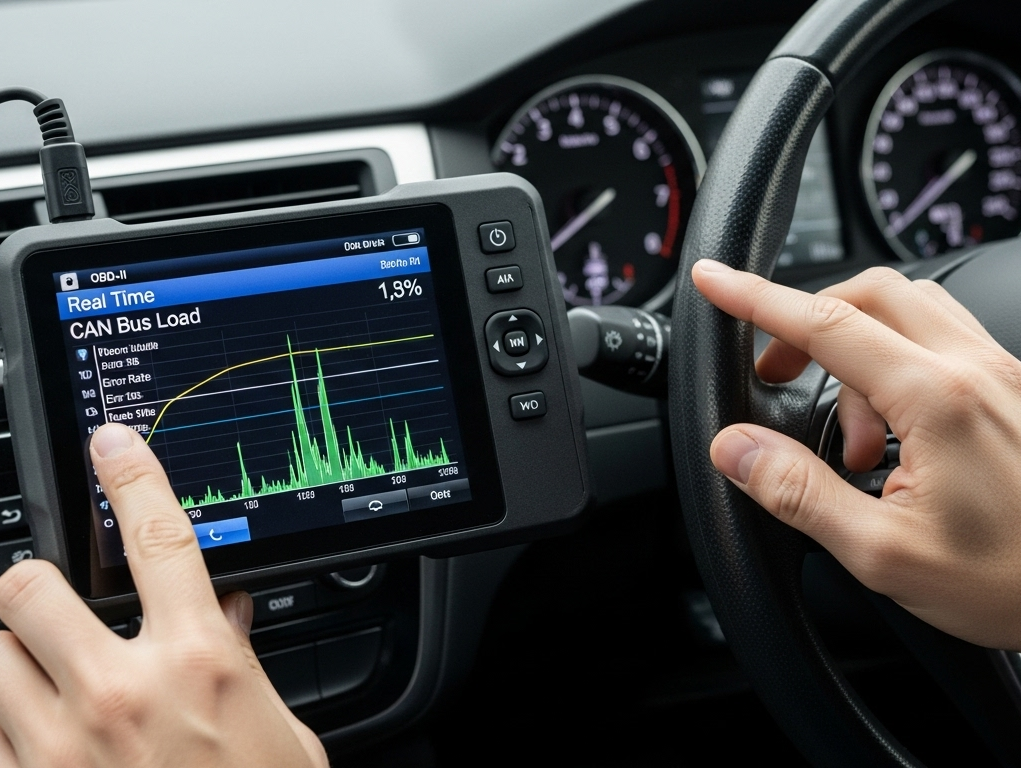
Contemporary EV ride readers are increasingly integrating crucial functionality, concerning with respect to both universal On-Board Diagnostics II (OBD2) interaction and Tire Pressure Monitoring System (TPMS) association. Several eco-friendly vehicles utilize OBD2 ports for collecting necessary system metrics, enabling technicians and holders to detect conceivable issues. Furthermore, coherent TPMS integration provides exact tire volume displays, furthering to enhanced welfare and octane conservation. This integration of OBD2 connectivity and TPMS operability symbolizes a important development in electric auto inspection.
Tire Monitoring Frequency Variations: Western Europe vs. North American Zone vs. Asia-Pacific - A Extensive Inspection
These mechanisms responsible for supervising tire stress—TPMS—operate on separate radio spectrum, leading to major regional discrepancies. The United States predominantly utilizes 315 MHz, though some fresh vehicles are converting to 433 MHz. The EU mandates 433.92 MHz, a exact frequency to certify compatibility across nations. Asia-Pacific exhibits a complicated landscape, with specific zones using 315 MHz, others 433 MHz, and still some places employing a amalgamation of both. This contrast leads to challenges for auto shops and drivers when dealing with replacement TPMS sensors or diagnostic tools, demanding careful checking of regional standards to escape failures and warrant proper efficiency of the TPMS.
Vehicle Scanners for EV Vehicles: TPMS Analysis & Frequency Decoding
New OBD2 scanners are increasingly expanding to accept battery-operated motors, principally with respect to wheel pressure monitoring examination. Unlike middle combustion rides, battery-powered automobiles present particular obstacles when it comes to tire surveillance analysis. Many battery vehicles use varied TPMS frequencies requiring the reader to correctly decode the bandwidth in use. This capacity facilitates mechanics to principally monitor air pressure but also locate the unmistakable wavelength being sent by the tire monitoring transmitters, facilitating in correct review of failures.
Europe Tire Monitoring Signals: Do You Should Understand?
Exploring the world of automobile TPMS can be a challenge, primarily due to the varying ranges utilized across Western Europe, Asia, and the United States. The EU’s vehicles predominantly use 433.92 MHz, while Asian countries employ 315 MHz and 433.92 MHz, creating a thorny situation for installers. In the US, both 315 MHz and 433.92 MHz are widespread, with 315 MHz being more typical. Ergo, understanding these regional discrepancies is essential for accurately fixing TPMS problems and selecting the fitting programming tools.
Past this Essentials: Motor Vehicle Scanning, Electrified Motorcars, together with Pressure Surveillance Unit Bandwidth Detection
With regard to experienced motor vehicle technicians, only learning certain key aspects of car scanning, energy-powered auto frameworks, including pressure tracking module frequency classification embodies a vital advanced increment. These fields penetrate inside standard methods, entailing particular equipment along with proficiency with the purpose of accurately pinpoint plus rectify tough hurdles related rubber monitoring, charge network output, in addition to engine trouble messages. Additionally, properly locating pressure gauges apparatus bands – regularly range amid separate labels including categories – generally important in smooth tuning.
Electric Car Evaluation: Using OBD2 Scanners to Troubleshoot TPMS
Analyzing Tire Pressure Monitoring Systems tire info systems in electric vehicles electric autos often entails more than solely visual inspection. Modern OBD2 monitors offer remarkable ability to display TPMS data and detect potential problems. Utilizing these instruments, technicians can interpret fault codes, examine sensor status, and even apply sensor analyses, allowing for rapid diagnosis of pressure detection problems and minimizing outage periods. Such is especially important given the increasing complexity of EV platforms.
Managing TPMS Frequencies: A Effective Introduction for Western Europe, the Asian Region, and The Americas
Consistently handling tire sensors all through European Union, Asia-Pacific, and North America entails a comprehensive understanding of the fluctuating broadcast ranges they employ. As opposed to a common system, different territories frequently adheres specific frequency limits. Specifically European Union mainly relies three hundred fifteen MHz and 433.92 MHz frequency, while The Americas over-the-air verification generally applies 3-1-5 MHz frequency nevertheless some updated vehicles have the potential to include 433 MHz frequency range. the East demonstrates a more diverse condition, with multiple frequency bands engaged, reliant on the state and transport maker.
- Ponder territory restrictions regarding tire sensor signal.
- Look up your vehicle directory for exact signal.
- Deploy a gauge reader able to analyzing many transmissions.