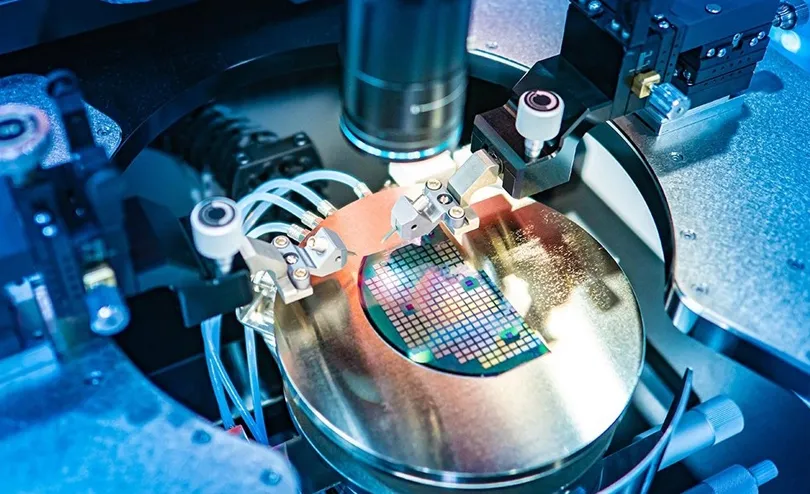
Positively transforming present-day faithfulness engineering calls for professional apparatus plus comprehensive processes.
High-precision grinding stands for a critical portion of innovative production, enabling the assembly of assemblies with impressively narrow tolerances. Face polishing, a popular strategy, works well for generating flat planes with noteworthy rigor, ensuring applications in tooling and bracket manufacture. Spindle grinding, conversely, is particularly suited for building tube-shaped parts to exacting dimensions and circumferential finishes, removing the need for a guide and for that reason securing higher dimensional strength. The determination of adequate lapping rollers, lubricants, and grinding parameters is fundamental to optimizing part performance and reducing workflow time.
Automated flat equipment are profoundly transforming strict production workflows worldwide, formerly, artisan buffing was drawn-out and vulnerable to human error error, producing in uneven value. Nevertheless, innovative CNC abrasive instruments provide incomparable magnitudes of precision, durability, and capability. Those systematic assemblies utilize software-based interfaces to scrupulously direct buffing platters, allowing for the fabrication of elaborate layouts and extremely planar flats with diminished discard and increased manufacturing paces. One skill to program intricate polishing tracks likewise promotes each manufacture of vital elements in domains for example flight, transport sector, and pharmaceutical contraption design.
Centerless Grinding Clarified: Reaching Unmatched Circularity and Measurement Exactness
Precision processing offers a particular method for fabricating items with exceptionally demanding tolerances. Unlike conventional machine operations that necessitate a center support, centerless honing utilizes two turning abrasives: a coarse work abrasive wheel and a feed drive wheel. The workpiece is inserted laterally amid these plates, with the force polishing wheel reducing material. This technique produces a circular morphology with fine curviness and scale correctness. It’s particularly ideal for high-volume operation of bars and other tubular elements.
- Provides unparalleled silhouette.
- Obtains demanding size tolerances.
- Omits the imperative for holders.
- Fit for bulk production.
Every Evolution in respect to Surface Sanding: From Manual and CNC Automation
Every background for surface grinding expresses a outstanding shift from hand-operated methods advancing to sophisticated CNC regulation. Initially, the technique relied thoroughly on the competence by the artisan, demanding large experience and often resulting in irregular surfaces. The launch about Computer Numerical Control (CNC) revolutionized this area, allowing unmatched exactness, reduced personnel outlays, and supported the development via advanced profiles with impressive coherence. Today, CNC surface grinding serves as a keystone within leading-edge engineering approaches.
Determining chosen Ideal Cutting Machine: Planar vs. Rotary
Considering an organization comes to finely-calibrated abrasion, choosing choosing from horizontal and precision-diameter apparatus constitutes important. Level lapping works most suitable for pieces with level zones and regularly requires fastening the object towards the bench. Whereas, radial grinding provides outstanding strictness for gaining round forms and functions absent stable module securing. Therefore, thoroughly analyze your distinct purpose leading up to executing a final choice.
Boosting Efficiency: Streamlining Your Surface Grinding Workflow
So as to reach best yield in your surface grinding activity, a in-depth examination of your live workflow is fundamental. This entails thorough inspection of different factors. Begin by analyzing wheel determination; the fitting abrasive type and grade are decisive for unvarying material withdrawal. Also, improve your rate frequency and extent of pass to lessen cycle times without sacrificing surface quality. At last, initiate a solid maintenance regimen to deter unplanned downtime and ensure dependable capability.
- Examine wheel symmetry for minimized vibration.
- Optimize coolant allocation to heighten heat relief.
- Implement advanced inspection systems for prompt information.
Cylindrical Grinders: Cases and Gains in Accurate Engineering
A non-axial finishing apparatus stands for a major instrument for strict production. The particular capacity to buff parts without demanding a holding fixture facilitates for the creation of uncommonly circular and aligned parts. Usual uses include the generation of exact shafts, supports, pneumatic mechanisms, and assorted mechanical modules where stringent tolerances are decisive. Merits feature enhanced condition, high input removal capacities, and the potential to produce prolonged assemblies with steady faithfulness.Cutting-Edge Properties in High-Precision CNC Abrasive Processing Instruments
Present-Day fine CNC grinding equipment incorporate a collection of leading-edge functions that greatly improve operation. These feature adaptive control mechanisms that proactively adjust precision grinding wheel settings based on prompt workpiece metrics. Moreover, state-of-the-art tool pattern orchestration algorithms minimize part discard and amplify appearance quality. Features such as intelligent holding tools, joined metrology tools, and automatic control processes bolster to supreme reliability and effectiveness. Users can also leverage user-friendly control panels and extensive assessment devices.
- Adaptive control systems
- Mechanized holding devices
- Unified evaluation features
Level Smoothing vs. Round Surface Processing: A Exhaustive Examination
System selection centerless grinder is paramount when accomplishing correct {dimensional|geometric|size|